I love small, carefully planned surprises — especially when they involve the river. Over the years I’ve arranged several private riverside dinners along the Ouse, working with local caterers, florists, boat operators and licenced venues. Each event has taught me something useful: how to keep the moment intimate, how to make the logistics disappear, and how to let the river’s natural charm shine through. Below I share how I plan a surprise private riverside dinner from first idea to the last candle blown out, with practical tips and supplier suggestions you can adapt for your own evening.
Choose the right riverside spot
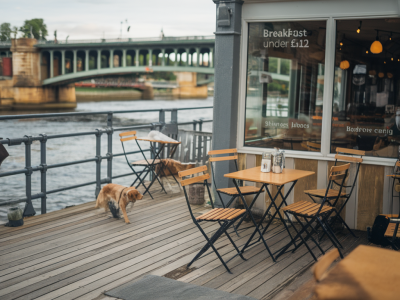
First, decide what kind of setting will make the surprise feel personal. Do you want a dockside bench where the city lights reflect in the water, a quiet stretch of towpath accessed from a park, or a private mooring on a hire boat? My favourite spots in York are the stretch by Rowntree Park for a leafy feel, or a mooring near the city centre for views of historic façades and the Minster in the distance.
When selecting your spot think about:
- Privacy: Is the area quiet in the evening or busy with passers-by?
- Access: How will your suppliers reach the location — on foot, by vehicle or by boat?
- Permissions: Is the area council-owned, a private mooring, or part of a managed park that requires a permit?
- Facilities: Is there lighting, a power source (for music or heating) or is everything battery-operated?
Permissions, licences and local rules
Don’t skip this step. I always check with City of York Council and, if relevant, the Environment Agency or harbourmaster for mooring rules. For a small, stationary dinner on a public towpath you might need a permit; for a private hire boat you’ll need to confirm the operator’s insurance and licencing. Booking a private space at an established riverside venue often simplifies permissions, since they hold the necessary licences already.
Typical checks I make:
- Confirm whether a temporary event notice (TEN) is required for amplified music or alcohol sales.
- Ask about start and end times so you respect local quiet hours.
- Check whether suppliers can park nearby or need to carry items a short distance.
Choose suppliers who understand the riverside
I prefer working with local businesses that know the quirks of riverside logistics. They tend to be flexible and offer practical solutions — battery-operated lighting, chilled boxes that fit in narrow gangways, or compact gazebos that can be erected quickly.
Suppliers I often recommend:
- Caterers: Look for boat-friendly menus and staff experienced in outdoor service. Local favourites in York include The Candle Kitchen (for refined, seasonal plates) and The Blue Bicycle for more informal, modern British menus.
- Florists: Choose someone who can work with compact arrangements that travel well — I’ve had great results with Little Wild Flower Co who create low, table-friendly centrepieces.
- Lighting & furniture hire: Hire companies such as York Event Hire supply bistro tables, cafe lights and battery lanterns — essential for an atmospheric evening without mains power.
- Boat operators: If you’re planning a mooring-based dinner or want to arrive by boat, contact local hire companies like Strand Cruisers or Rowntree Park Boat Club to discuss options.
Design a simple, crowd-free menu
I aim for food that works for outdoor service and won’t suffer if it cools a little. Sharing plates, grazing boxes, or a plated three-course menu with warm components held in insulated carriers all work well.
Menu ideas that travel well:
- Starter: chilled pea and mint soup served in fluted shot glasses, or a smoked trout rillette on crostini.
- Main: herb-roasted chicken with warm fennel salad, or a vegetarian wild mushroom risotto kept warm in a thermal dish.
- Sharing dessert: a lemon posset in jars, or a selection of local cheeses with oatcakes and apple chutney.
Always ask about dietary needs in advance — I once swapped a flax-seed crusted fish main to a vegan parsnip and hazelnut roast at the last minute without a hitch because I’d confirmed allergies beforehand.
Transport, set-up and rehearsal
Plan how everything will get to the river. If suppliers must carry items across uneven paths, ask them to use crates with wheels or to stage a drop-off as close as permitted. I always arrange a short rehearsal with key suppliers: where will the table be? Where is the emergency access point? Which path will be kept clear for guests?
My usual timeline:
- 2–3 hours before: suppliers arrive and set out furniture, lighting and tableware.
- 1 hour before: food is delivered and plated; warm dishes are kept in thermal carriers.
- 30 minutes before: finishing touches — candles, flowers, a quick music check.
Music, ambience and small details
Sound matters. A soft playlist played through a discreet Bluetooth speaker creates atmosphere without overwhelming conversation. For an extra layer, hire a solo musician — a violinist or acoustic guitarist — who can perform from a distance if space is tight.
Ambience checklist I always use:
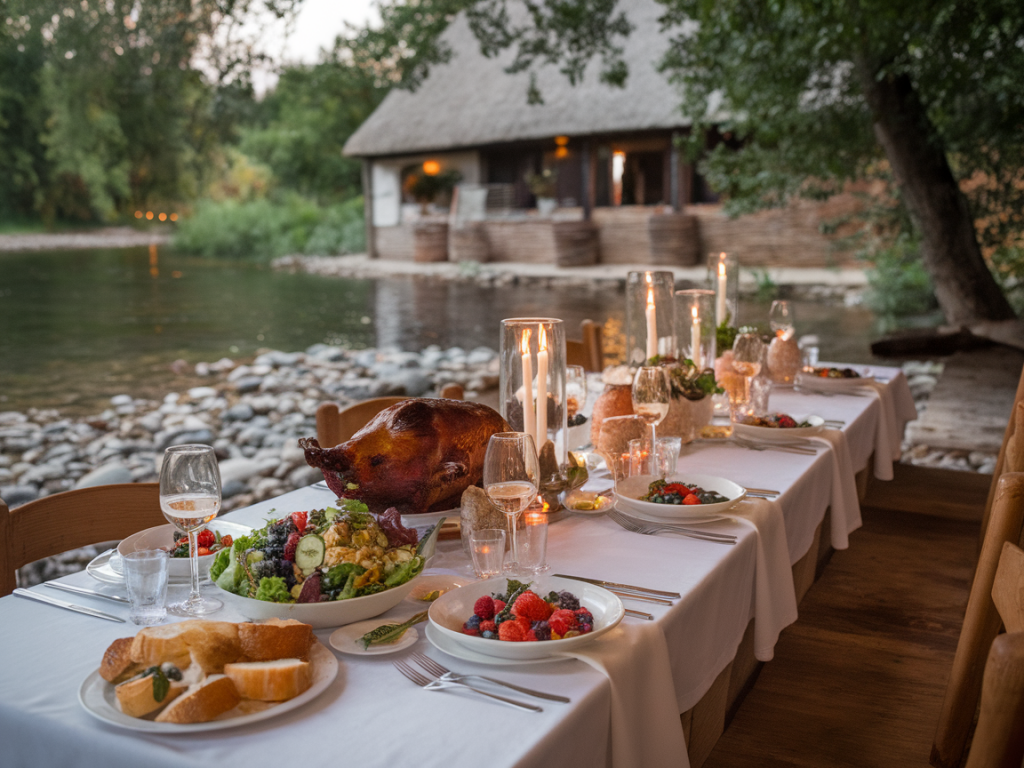
- Warm, soft lighting: battery fairy lights and pillar candles in glass lanterns.
- Comfort: wool blankets for chilly evenings, portable heat lamps if permitted.
- Tableware: unbreakable plates if the setting is precarious, cloth napkins for a touch of formality.
- Waste plan: clearly marked bins and a supplier agreement to remove all rubbish.
Keeping the surprise — logistics for the guest of honour
Timing and misdirection are the backbone of any good surprise. I usually arrange a plausible pretext — an evening river stroll, a “book signing” at a nearby café, or tickets to a small concert — and brief everyone involved on cues. Assign one person as the cue-keeper to ensure the moment of reveal feels effortless.
Practical tips for the reveal:
- Lead the guest of honour along a path that builds anticipation; don’t rush the approach.
- Use a final reveal point where the table is visible slowly — a bend in the path or a gate opening.
- Hand them a small token at the start (a note, a single flower) so the surprise feels thoughtful before they see the setting.
Budget guide and a simple supplier table
Costs vary widely depending on scale and choice of suppliers. Below is a rough guide for a riverside dinner for two to six people.
| Item | Typical cost range |
| Catered meal (per person) | £30–£90 |
| Florist & table styling | £50–£200 |
| Furniture & lighting hire | £40–£150 |
| Boat hire / mooring fee | £0–£200+ |
| Musician | £80–£200 |
| Permits / TENs | £0–£150 |
One of my most memorable evenings cost under £300 because we kept things small and partnered with a talented local chef who offered a set menu. Conversely, a full boat hire with live music can quickly reach £800–£1,200 for a more lavish experience.
Final safety and courtesy checks
Before guests arrive I do a safety sweep: remove trip hazards, ensure lighting covers steps and edges, check the weather forecast and have a wet-weather plan ready. I always tell clients to respect the riverside environment — no leftover glassware on the bank, and leave the area as we found it.
If you’d like, I can recommend local suppliers I’ve worked with and help sketch a plan for your dates. There’s a particular pleasure in seeing someone’s face when the river, the light and a thoughtfully-laid table come together — and with a little planning, you can create that exact moment for someone you love.