Choosing a riverside room for a quiet sunrise and a clear view of the Ouse is one of my favourite parts of planning a visit to York. Over the years I’ve stayed in many properties along the banks here, tested breakfast nooks at dawn, and learned which practical details actually make the difference between a magical riverside morning and a slightly disappointing one. Below I share the questions I hear most — and the exact things I check — so you can book a room that wakes you with soft light, a peaceful river, and the sort of view that invites you to linger.
Which direction matters most?
For a sunrise over the Ouse, the room’s orientation is the primary factor. East- or southeast-facing windows catch the early light; north-facing rooms rarely get a true sunrise glow. When you browse a property’s photos or floor plan, look for rooms described as “riverside”, “front-facing”, or “overlooking the river”. If there’s any doubt, ask reception directly which rooms face east toward the water. I always email before booking and request an east-facing room — it’s a small request many hotels can accommodate.
Ground floor or upper floor: which is better?
Both have pros and cons.
- Upper floors usually offer clearer, less obstructed views and a better vantage point for watching the river and sunrise. You’ll also get more privacy and often less street noise.
- Ground floor rooms can be lovely if they open directly onto a terrace or riverside path; they’re great for stepping out for an early walk. But they can be more exposed to passers-by and to riverside traffic.
I tend to prefer a second- or third-floor room for that perfect balance of view and quiet; you can see reflections on the water without being overlooked by morning dog-walkers.
How important are windows and glazing?
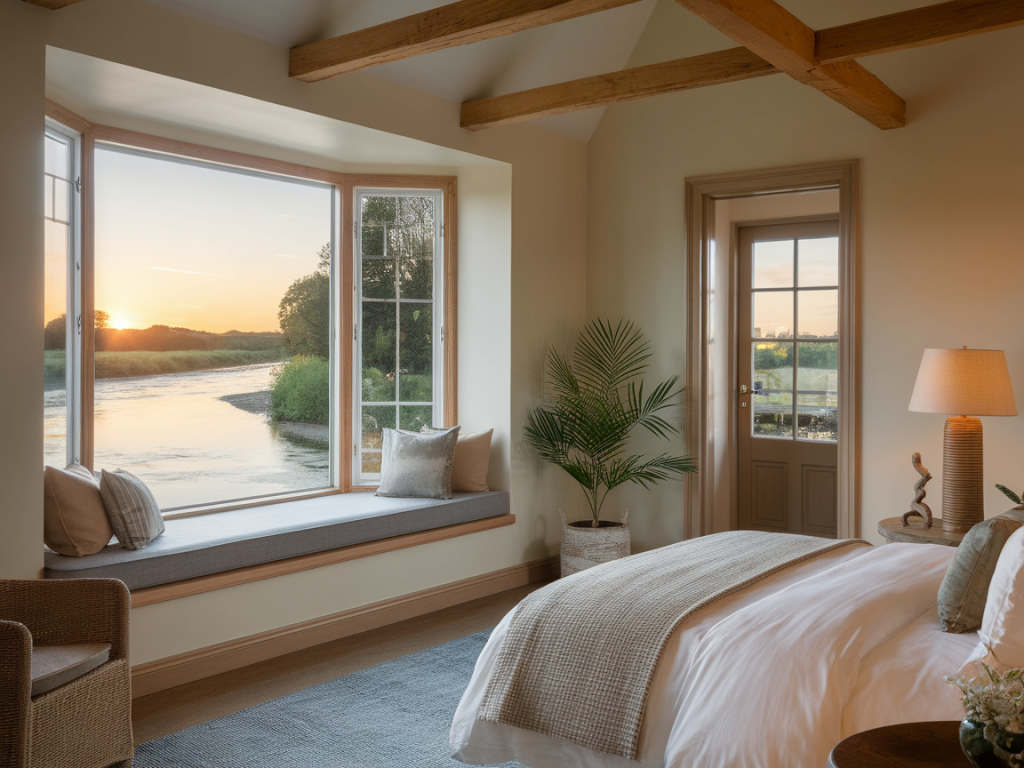
Big windows and a low sill make all the difference — the room should feel like it breathes with the river. When I scout rooms, I look for:
- Large sash or casement windows that open wide enough for fresh air.
- Double-glazing that still preserves a clear view but cuts down early-morning street noise.
- Windowsills wide enough to sit on or place a cup of tea while watching the light change.
If a property advertises “bay windows” or “floor-to-ceiling glazing”, that’s usually a good sign for photographers and those who plan to savour the sunrise from bed or the window seat.
What about balconies or terraces?
A private balcony makes a riverside sunrise feel cinematic. Not every riverside room has one, but it’s worth asking about. Small Juliet balconies still let you hear the river and dip your head into morning air — and they make it easier to take unobstructed photos. If you’re after a balcony, request it when booking and confirm whether it faces the river or a courtyard.
Noise: what disturbances should I expect?
People often worry about noise — from riverside pubs, delivery vans or early-morning walkers. Here’s what I check:
- Is the room next to a public bar or restaurant? Even good hospitality can mean later hours.
- Are there riverside walks or a quay directly beneath the windows? These can be tranquil at dawn but busier later.
- Does the property have solid doors, good locks and soft-close mechanisms? Little things reduce hallway noise.
When I’m sensitive to noise, I ask about soundproofing or request a room facing the river but set back from the promenade. Many of York’s riverside hotels have invested in glazing that balances view and quiet — don’t be shy about asking for that detail.
How can I verify the view before I arrive?
There are several practical checks I always make:
- Read recent guest reviews and look for photos taken from the room — real guest photos are the best evidence.
- Email the property and ask for a photo from the specific room or a floor plan showing orientation.
- Check Google Street View to confirm whether neighbouring buildings or trees will block the sunrise.
- Ask for a room number and then search that number in reviews or on social media — sometimes guests tag specific rooms.
When should I book to get the best light and calm?
Time of year affects everything. For soft, crisp sunrises I prefer late spring (May–June) and early autumn (September). Mornings are cooler and the angle of light is often more flattering. Summer offers longer days but also more early-morning activity along the river. Winter sunrises can be dramatic, with low light and mist, but you’ll need robust heating and a warm robe.
Also consider events: festival weekends, rowing events or market days bring energy — and noise. If you want tranquil dawns, avoid big event dates listed on the property’s calendar or York’s events page.
What practical amenities make a riverside room better for sunrise?
Small comforts enhance the experience:
- A kettle and good tea or a Nespresso machine to brew something warm and watch the colours change.
- A comfortable chair or window seat positioned for the view.
- Quality blackout curtains that still allow a soft dawn glow without waking you too early on purpose.
- Binoculars for birdwatching and spotting river life (I carry compact 8x25s).
- USB plugs and bedside lighting for those who photograph the sky and want to charge quickly.
What should I pack for an early riverside morning?
- A warm layer — riverside mornings can be unexpectedly chilly, even in summer.
- A lightweight travel tripod or a smartphone clamp for steady sunrise shots.
- Comfortable footwear for a dawn walk along the Ouse — I recommend waterproof trainers or ankle boots.
- Binoculars and a small field guide if you enjoy birdwatching.
Booking tips and how to ask for exactly what you want
When I make a reservation I do three things:
- Book directly where possible — many small hotels and guesthouses on the riverside will note special requests in your reservation and sometimes prioritise them for direct-booking guests.
- Email in advance with a clear request: say you’d like an east-facing riverside room for sunrise, mention any mobility needs, and ask if they can confirm a room number or provide a photo.
- Call on arrival — a friendly check-in call or a quick chat with reception can confirm the room and sometimes allow a slight upgrade if available.
| Quick riverside room checklist | |
| Orientation | East or southeast-facing windows |
| Floor | 2nd–3rd floor often best for unobstructed views |
| Windows | Large sash/casement or floor-to-ceiling preferred |
| Outside space | Balcony or terrace = bonus |
| Noise factors | Check proximity to bars, riverside promenade, events |
| Amenities | Kettle, window seat, blackout, binoculars |
Finally, trust your instincts. If a room description or a guest photo makes you feel excited, it probably will deliver. I love to pair a riverside sunrise with a slow breakfast — whether in-room pastries or a riverside table at a nearby cafe — and that morning ritual often defines the whole stay. If you want, you can tell me your travel dates and I’ll suggest which rooms at local properties I think are most likely to give you that clear Ouse view and quiet dawn you’re hoping for.