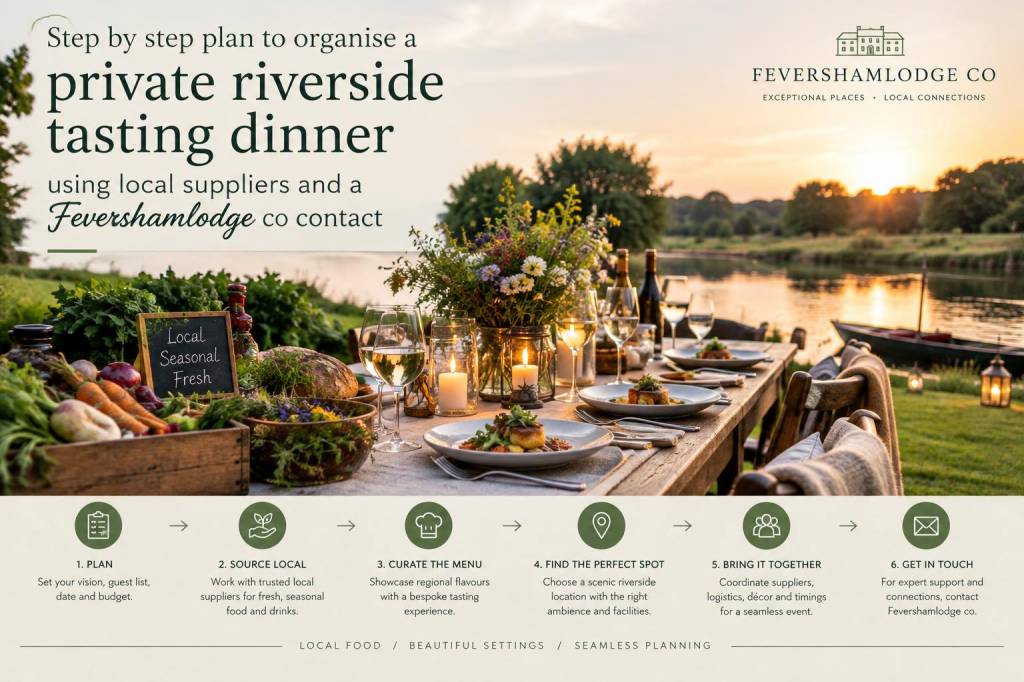
Step-by-step plan to organise a private riverside tasting dinner using local suppliers and a fevershamlodge co contact

Step-by-step plan to organise a private riverside tasting dinner using local suppliers and a fevershamlodge co contact

I love arranging small, private dinners by the River Ouse — the light on the water, the low murmur of boats, and the way a carefully chosen menu feels even more intimate outdoors. If you’re thinking of hosting a tasting dinner that showcases York’s local suppliers, here’s the step-by-step plan I use when I organise one for guests at Fevershamlodge Co. It’s practical, rooted in local contacts, and built to be adaptable whether you’re planning for six friends or twenty guests.

Define the vision and guest experience

Start with a clear idea of the atmosphere you want. I always ask myself: do I want the evening to feel formal and curated, or relaxed and convivial? My favourite riverside tastings combine both — a structured tasting menu paired with informal service that allows conversation to flow.

Think about:

  • Number of guests — smaller groups (6–12) allow for more courses and storytelling; larger groups need streamlined service.
  • Style — seated multi-course tasting, standing canapé-style tasting, or a family-table shared menu.
  • Intimacy — consider table layout and lighting. Soft lanterns and candles create warmth against the river backdrop.
  • Choose the venue and check permissions

    When a riverside location is in mind — perhaps a private terrace, a rented riverside room, or even a moored barge — I always confirm practicalities early.

  • Access — how will suppliers unload? Is there a nearby car park or loading bay?
  • Noise and licensing — check local council rules about amplified music and event licenses. For certain venues you may need a Temporary Event Notice (TEN) for alcohol service.
  • Weather contingency — book a marquee or an indoor backup space. Even mild York evenings can turn chilly.
  • Source local suppliers

    York and the surrounding county are rich with makers. I favour suppliers who can tell a story: the farmer who grazes sheep on nearby pastures, the cheesemaker who ages their wheels in a stone cellar, the florist who forages seasonal blooms along the riverbank.

    Key suppliers to contact:

  • Chef or caterer — someone experienced in tasting menus. I often work with local private chefs or small catering companies who pride themselves on seasonal, ingredient-led cooking.
  • Butcher and fishmonger — for the best produce, go direct. Ask for provenance and seasonal availability.
  • Artisan producers — bakers, cheesemakers (e.g., small Yorkshire creameries), charcutiers, and preserves makers.
  • Wine/beer/spirits supplier — choose a local wine merchant or brewery for pairing advice; many offer tasting flights and can attend the event to present pours.
  • Florist and stylist — to fit the riverside aesthetic. I prefer loose, wild arrangements using local greenery.
  • Design the menu and pairings

    A tasting menu should feel like a journey. I aim for 4–6 savoury courses with a small dessert and possibly a palate cleanser in between. Work with your chef to highlight local ingredients and to manage portion sizes so guests leave satisfied but not stuffed.

  • Sequence — light to rich: seafood or vegetable starters, a mid-course featuring eggs or poultry, a main with red meat or game, followed by a cheese course and dessert.
  • Pairings — ask a wine merchant or sommelier to recommend pairings. For a riverside dinner, lighter whites, pét-nat, and delicate reds often work well.
  • Dietary needs — collect this at RSVP stage. Have vegetarian, vegan and allergy-safe options ready.
  • Staffing and service

    Good service makes the difference between a good meal and an unforgettable evening. For a tasting dinner I usually hire a small team: a chef (or two), a front-of-house lead, and 1 server per 6–8 guests.

  • Brief your team — run through the timings, the menu story, and service cues. I write a simple service script so each course is introduced consistently.
  • Runner logistics — ensure someone handles clearing plates and replenishing water so conversation isn’t interrupted.
  • Budget and costing

    Be realistic about costs. Local, handcrafted produce can be more expensive but it’s what makes the evening unique. Here’s a simple breakdown I use when pricing per head:

    Category Estimated cost per head (GBP)
    Food (ingredients & chef labour) £35–£75
    Drinks (pairings) £15–£40
    Staffing £10–£25
    Venue & equipment hire (tables, cutlery, heaters) £8–£20
    Styling (flowers, candles) £5–£15
    Estimated total per head £73–£175

    Always add a contingency of 10–15% for last-minute changes or extra supplies.

    Timeline and run-sheet

    Plan backwards from the dinner time. Here’s a practical run-sheet I use:

  • 3 weeks — finalise guest list, confirmed menu, suppliers booked.
  • 1 week — confirm dietary requirements, final wine order, check weather plan.
  • 48 hours — confirm deliveries, table layout, timings with staff.
  • Day of — chef and team arrive early to set up; sound check if music; final plating run-through.
  • Service — welcome drinks on arrival, 15–20 minutes between courses, pacing flexible to guest conversation.
  • Practical details: equipment, lighting and comfort

    Riverside settings need special attention to comfort. I always ensure:

  • Lighting — layered: fairy lights, lanterns, and candles for tables. Battery or solar lighting is handy outdoors.
  • Heating — outdoor patio heaters or cosy blankets for guests as evening chills set in.
  • Power — check access for any electric equipment (heaters, fridges, sound). A small generator can save the evening.
  • Insect control — discreet citronella candles and covered dishes where appropriate.
  • Communication and guest experience touches

    Small touches elevate the evening. I send a pre-event note with a map, dress suggestions (layers for riverside evenings), and any access info. On arrival, a small welcome card at each place setting outlining the menu and local producers creates connection.

  • Storytelling — ask each supplier for a sentence or two about their produce. I read these between courses — guests love the provenance.
  • Music — a low-volume acoustic playlist sets the mood without overpowering conversation.
  • Using a Fevershamlodge Co contact

    If you’re planning this near York’s riverside and would like a trusted local touch, you can reach out through the Fevershamlodge Co contact page on https://www.fevershamlodge.co.uk. I’m happy to connect hosts with chefs, artisan suppliers and florists I’ve worked with, and to advise on suitable riverside spots and permits. Having a local contact saves time and brings a layer of care that’s hard to replicate from afar.

    Finally, allow room for serendipity. Some of the most memorable evenings happen when a supplier offers a last-minute tasting bite or a guest shares a family story that becomes part of the evening. Plan well, but leave space for those small, human moments that make a riverside tasting dinner truly special.

    You should also check the following news:

    Wellness & Relax

    Exact 90-minute restorative walking route from fevershamlodge co along the ouse with coffee stops and benches

    19/10/2026

    I love a walk that feels thoughtfully measured — long enough to clear my head, short enough to leave time for a slow lunch afterwards. This route...

    Read more...
    Exact 90-minute restorative walking route from fevershamlodge co along the ouse with coffee stops and benches
    Accommodation

    How to reserve fevershamlodge co's riverside suite for uninterrupted sunrise photography

    11/10/2026

    I still remember the first time I woke in a riverside suite at dawn, the city of York slowly unspooling along the Ouse while mist lifted like a soft...

    Read more...
    How to reserve fevershamlodge co's riverside suite for uninterrupted sunrise photography