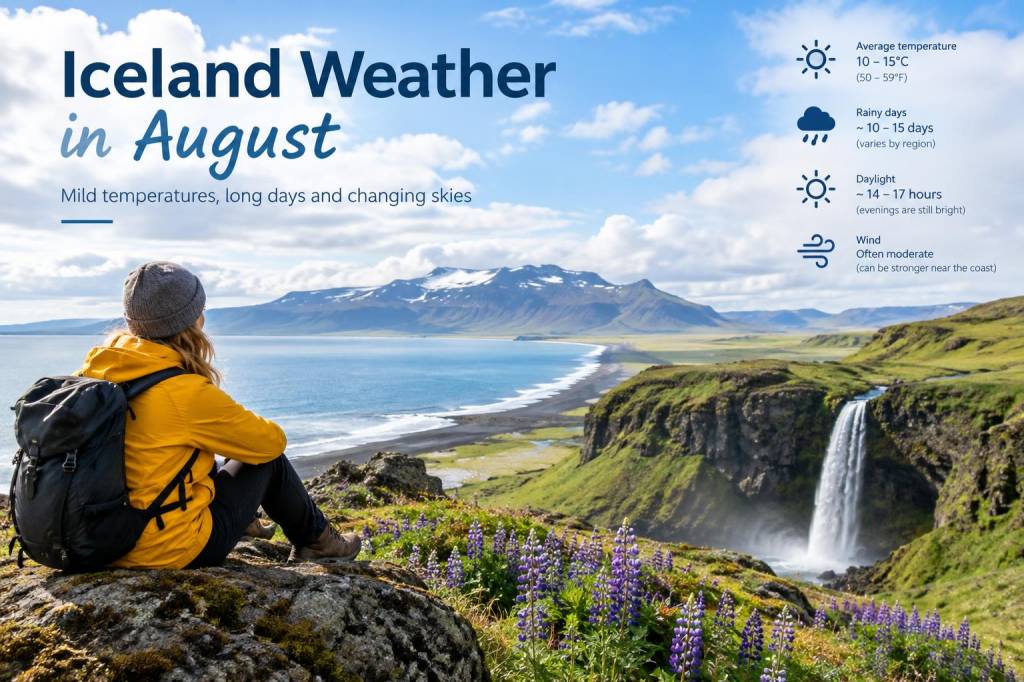
When I plan a summer trip to Iceland, I always start with one question: what do the conditions météo en Islande durant lété really feel like on the ground? In August, Iceland can look mild on paper and still surprise me in person. A morning may begin with clear light and calm air, then shift into rain, wind, and mist by afternoon. That rhythm is part of the country’s charm, but it also changes how I pack, what I book, and how I plan each day.
In this article, I focus on what I actually need to know for August travel: temperatures, rainfall, daylight, wind, and hiking conditions. I also compare regional differences, because Iceland is not one uniform weather zone. Reykjavik, the South Coast, the Westfjords, the Highlands, and the North can all feel very different on the same date. That matters if I want to hike, drive, or simply enjoy a slower, comfortable trip.
What August feels like in Iceland
August is part of Iceland’s short summer, but it is not a warm summer in the continental sense. I usually expect cool air, changeable skies, and a high chance of layering my clothing from sunrise to sunset. Coastal areas are often milder than inland zones, but the wind can make any temperature feel lower than the number shown on my phone.
From a travel perspective, August is one of the most practical months to visit. Roads are more open than in winter, hiking access is broader, and daylight remains generous, even if it is not endless. For me, that makes August a strong balance between accessibility and atmosphere.
- Typical daytime temperatures: often around 10°C to 15°C, depending on region
- Night temperatures: commonly around 7°C to 10°C in lowland areas
- Rain: frequent enough to matter, even during sunny spells
- Wind: one of the main factors that shapes comfort
- Daylight: long enough for full-day sightseeing and hiking
Regional differences I pay attention to
I never pack for Iceland as if every destination will feel identical. August weather changes by region, elevation, and exposure to the coast. When I map out a trip, I think about these zones separately.
| Region | What I usually expect in August | Practical impact |
|---|---|---|
| Reykjavik and the southwest | Cool, breezy, and often damp, with moderate temperatures | Comfortable for city time, day trips, and light outdoor plans |
| South Coast | Changeable weather, stronger wind, frequent showers | Great for waterfalls and scenery, but I plan flexible timing |
| North Iceland | Sometimes a little drier and sunnier than the south, but still cool | Useful for longer road trips and hiking windows |
| Westfjords | Highly variable, with remote conditions and quick weather shifts | Best for experienced drivers and travelers who leave margin in the schedule |
| Highlands | Colder, windier, and more exposed | Requires careful route planning and strong gear |
Temperature, rain, and wind in practical terms
When people ask me about Iceland in August, I think the real answer is not just “cold” or “mild.” It is a mix of temperature, moisture, and wind. A dry 12°C day can feel pleasant with a light jacket. A wet 12°C day with strong gusts can feel dramatically colder. That difference affects every decision I make, from what I wear to how long I stay outside.
I also keep a close eye on rain patterns. August can bring showers, mist, drizzle, and more persistent rain, especially in exposed areas. Water-resistant layers matter more than a heavy coat, because I need clothing that handles movement, wind, and quick changes. If I am hiking, I always assume my route may involve mud, slick stones, and reduced visibility, even when the forecast looks decent.
Wind is the element I respect most. It can change the feel of a day faster than temperature ever does. It can also affect ferry schedules, driving conditions, and hiking safety. In Iceland, I do not treat “mild weather” as a complete description unless I know the wind forecast too.
Daylight and summer rhythm in August
One reason I enjoy August so much is the light. Days are still long enough for ambitious sightseeing, but evenings begin to feel a little more structured than in midsummer. That shift can be useful: I can enjoy a full day outdoors and still have a more natural evening routine for dinner, rest, or a slower walk.
Long daylight hours are especially helpful if I am driving the Ring Road or combining multiple stops in one day. I can leave flexibility for a late waterfall visit, a second viewpoint, or a detour if a weather window opens. In my experience, August gives me enough light to travel actively without the extreme midnight brightness of early summer.
What I wear and pack for August
I build my packing list around layers, not around one “warm outfit.” Iceland rewards flexibility. I want clothing that handles shifting conditions without making me overpack.
- Base layers: breathable tops that keep me comfortable during walks
- Mid layer: fleece or lightweight insulated layer for cooler evenings
- Outer layer: waterproof and windproof jacket
- Pants: comfortable trousers that dry quickly
- Footwear: waterproof walking shoes or hiking boots with good grip
- Accessories: hat, gloves, and neck layer for windy viewpoints
- Extras: dry bags, spare socks, and a compact rain cover for a backpack
If I plan hiking days, I also bring trekking poles, especially on uneven terrain or in wet conditions. A small towel and a thermos can make a surprisingly large difference after a damp walk or a cold stop near a waterfall.
Hiking in summer: what feels realistic
August is one of the more rewarding months for hiking in Iceland, but I still treat the terrain with respect. Trails can be muddy, exposed, steep, or slippery, and weather conditions can change quickly even on a short route. I prefer to choose hikes according to forecast, not just according to scenery.
When I plan a hike, I ask myself a few questions: Is the route exposed to wind? Will the ground be wet? Is there river crossing involved? Is there enough daylight margin if I walk slower than expected? These questions matter as much as distance or elevation gain.
- Check weather and trail conditions on the same day, not just the night before
- Start earlier if the forecast looks unstable
- Carry extra water and snacks, even on short hikes
- Stay on marked paths to protect both safety and fragile landscapes
- Turn back if visibility or wind becomes uncomfortable
Useful sources I trust when checking forecasts
I never rely on a single app when I travel in Iceland. I compare several sources, because local forecast changes can be very fast and very specific. These are the resources I check most often before I head out:
- Icelandic Met Office for official weather, warnings, and wind forecasts
- Road.is for road conditions, closures, and travel alerts
- SafeTravel.is for safety notices, travel advice, and environmental alerts
- Vedur.is for detailed meteorological maps and regional updates
For broader climate context, I also like reading seasonal data from trusted reference sources such as the Icelandic Met Office climate pages and established travel climate summaries. That helps me understand not only what the forecast says today, but also what August typically looks like over time.
How August compares with other summer months
If I compare August with June or July, I usually find August a little more transitional. It still belongs to summer, but it often feels slightly more grounded and less bright at night. For me, that means August is ideal if I want strong access to nature without the peak-season intensity of earlier months.
June can feel brighter and sometimes cooler. July often feels like the fullest summer window. August sits in between: still excellent for travel, often still very workable for hiking, but with a subtle shift toward the coming autumn. That is exactly why I like it. It gives me a summer trip without pretending Iceland is ever truly warm in the Mediterranean sense.
Questions I hear most often about August weather
Is Iceland warm in August? Not in the usual holiday sense. I would call it cool to mild, with real variability.
Does it rain a lot? Yes, rain is common enough that I plan for it every day, even if I never see a downpour.
Can I hike comfortably? Yes, as long as I choose routes carefully, wear proper layers, and watch the forecast closely.
Is August good for driving? Usually yes, and often better than shoulder-season months, but I still check road and wind conditions daily.
Should I pack winter clothing? I do not pack full winter gear, but I never travel without waterproof outerwear, warm layers, and sturdy shoes.
What I would tell a first-time visitor
If I were advising a friend on their first Iceland trip in August, I would say this: do not chase a perfect weather day, because perfection is not the point. The country is at its best when I stay adaptable. I would build my itinerary around a mix of outdoor time, scenic drives, and a few indoor anchors for balance. I would also leave room for spontaneous changes, because the weather sometimes improves in places I did not expect, and shifts elsewhere without much warning.
I would also remind myself that August is still one of the best months for seeing Iceland in a practical way. I can reach a wide range of landscapes, enjoy long days, and still have enough flexibility to adjust plans when wind or rain moves in. That combination is what makes August feel so travel-friendly to me, even when the sky refuses to behave.