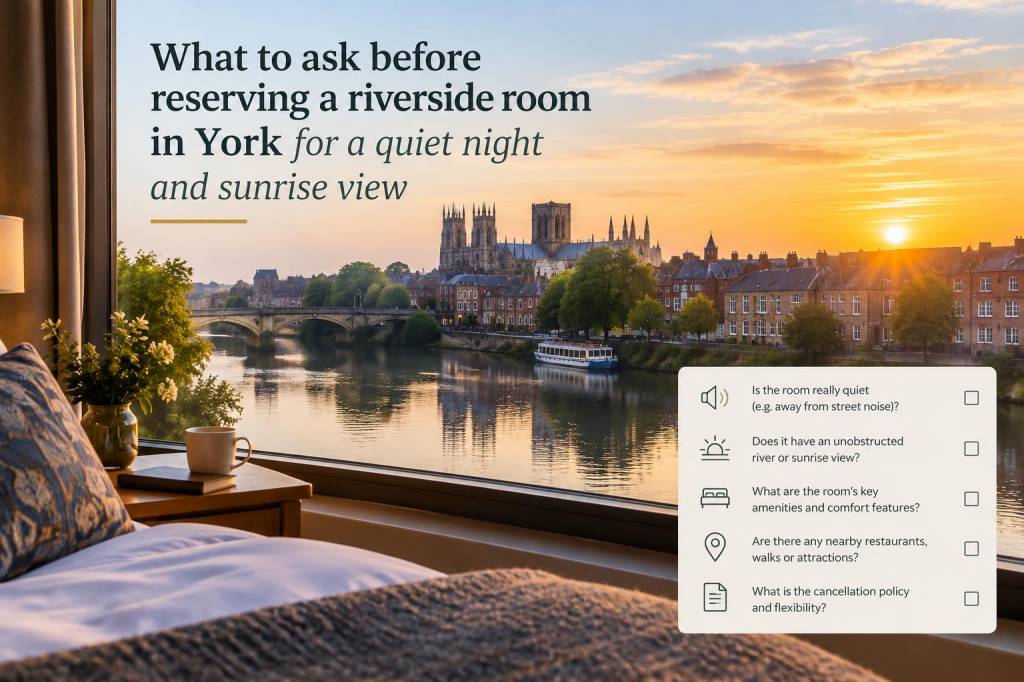
When I reserve a riverside room in York, I do not start with photographs alone. I start with questions. A room can look serene in pictures and still feel noisy, shaded, or less private than I hoped once I arrive. Since my own visits to York often revolve around rest, slow mornings, and a sunrise view over water, I have learned that a careful conversation with a property is worth far more than a polished listing. If I want a quiet night and a clear dawn, I ask direct, specific questions before I confirm anything.
I have found that most disappointments can be avoided when I ask about location, light, noise, and room position. A riverside stay should feel calm from the moment I walk in, yet that feeling depends on details that are not always obvious online. Some rooms face a lively street behind a pretty river frontage. Some look toward water but sit near a lift, a staircase, or a late-night bar. Some offer a lovely view at dusk yet receive almost no early light. My aim is always to understand what I am really buying before I press reserve.
Questions I ask about room placement
The first thing I want to know is where a room sits within a building. I ask whether it faces directly onto the river, sits on a side wing, or looks over a courtyard. I also ask whether it is on an upper floor or ground level. In my experience, floor level can change everything. An upper room often brings more light, a broader outlook, and less foot traffic past the door. A lower room may feel more enclosed, though it can also feel quieter if it is away from common areas.
I also ask if a room is near an elevator, a staircase, housekeeping storage, or an external entrance. These details matter far more than many people realise. Even a beautiful room can lose its sense of calm if guests pass by all evening or staff begin early-morning work nearby. When I want sleep to feel deep and uninterrupted, I prefer a room at a distance from busy routes through a property.
Another detail I ask about is window orientation. A river-facing room can still receive morning light from an angle that changes throughout the year. In York, light can be gentle, low, and atmospheric, which I love, but if I want sunrise, I ask whether a room looks east or at least catches early brightness. If a property cannot promise a direct sunrise view, I ask what kind of light reaches that side of the building first.
Questions I ask about noise after dark
Quiet night matters as much as sunrise. A river view is lovely, but water does not guarantee silence. I ask whether rooms hear traffic, delivery activity, nearby restaurants, or late-evening guests on terraces and balconies. York can be peaceful, yet certain streets and riverside paths stay active well into evening, especially during holidays, weekends, and event days. I want to know if external sound is likely to drift into my room once windows are open.
I also ask about internal soundproofing. Some properties have solid walls and thick doors, while others carry sound from corridors, adjoining rooms, or breakfast spaces. I ask whether windows open, whether they seal well, and whether a room has secondary glazing. If I plan to sleep with windows closed, I still want to know whether the building itself is quiet enough for a restful night.
One question I never skip is whether there are any known noise patterns. For example, I ask if river maintenance work ever happens nearby, if church bells can be heard at certain hours, or if a nearby venue hosts music. I do not avoid every sound; I simply want to make an informed choice. A little city atmosphere can feel charming, but I want charm without surprise.
Questions I ask about sunrise and morning light
Sunrise can mean different things from one room to another. Sometimes it means a visible horizon glow. Sometimes it means first light on the curtains before a skyline appears. If a sunrise view matters to me, I ask whether I can see actual water from bed, from a chair, or only from a side angle near the window. I want to know whether I will wake to a meaningful view or merely have a room name that suggests one.
I also ask whether any buildings, trees, or bridges block the morning sun. York has beautiful historic layers, and those layers can create shadows. That is not a drawback in itself, but it does affect what I can expect at dawn. If I want to sip coffee while watching the river brighten, I ask whether the room gets first light before breakfast service begins.
For me, a good question is this: “If I stay in this room, what will I actually see at sunrise?” I ask for a plain answer, not a marketing phrase. When staff answer clearly, I usually trust the property more. Straightforward replies tell me that they understand guest expectations and are willing to match room features with real needs.
Questions I ask about privacy and comfort
Privacy matters whenever I reserve a room with a view. Big windows can feel wonderful, but only if they do not expose me to passersby or overlook nearby buildings too closely. I ask whether curtains or blinds fully close, whether there are sheer layers, and whether the room has a comfortable seating area near the window. If I plan to spend quiet time reading, writing, or simply watching the river, I want a space that feels restful rather than exposed.
I also ask about temperature control. A room with excellent light can still feel too warm in summer or too cool on a damp evening. I want to know whether the room has independent heating or cooling, how easy it is to adjust, and whether windows can safely open for fresh air. When a property answers clearly, I can picture how I will sleep there, not just how I will photograph it.
Bed comfort matters too, so I ask about mattress firmness, pillow options, and whether the bed is fixed as a double or can be arranged differently. For me, a quiet night depends on a comfortable bed as much as on a quiet setting. If I wake early for sunrise, I want to sleep deeply beforehand, not spend half the evening adjusting pillows.
Questions I ask about breakfast and morning rhythm
If I want sunrise, I often care about breakfast timing as well. I ask when breakfast begins, whether early coffee is available, and whether I can leave for a morning walk without missing service. A room with a lovely dawn view becomes even more rewarding when the property supports an unhurried start to the day.
I also ask whether breakfast spaces overlook the river or feel tucked away from it. Sometimes I like to stay in my room until the light is right, then head down for a quiet meal. Other times I want to leave early and find a nearby café before the day grows busy. Either way, I like knowing my options. A property that understands slow mornings usually understands restful stays in general.
If I am staying more than one night, I ask whether room servicing can be delayed until later in the morning. I do not always want to wake early and return to a room that has already been entered before I have had my coffee. A calm stay should move at a human pace, not a rushed one.
A simple question list I keep in mind
| Topic | What I ask | Why it matters |
| Room position | Where within the building is it located? | It affects quiet, light, and privacy |
| River outlook | Can I see water from bed or from a window seat? | It shapes what I will experience on arrival |
| Morning light | Does this side receive sunrise or early brightness? | It helps me plan for dawn views |
| Noise | Is there nearby traffic, music, or corridor sound? | It affects sleep quality |
| Privacy | Are curtains full coverage and windows well screened? | It supports comfort and relaxation |
| Morning service | What time does breakfast begin? | It helps shape a calm first hour of day |
Questions I ask when I want confidence, not just comfort
Sometimes I ask a property to describe a room in plain language rather than relying on category names. I may ask whether it feels more intimate or more spacious, whether the view is wide or partial, and whether guests usually choose it for quiet nights or for outlook. These answers often reveal more than a room label ever could.
I also ask whether staff would personally recommend that room for someone seeking a peaceful night and sunrise view. That question invites honest insight. When a team says yes without hesitation, I pay attention. When they suggest another room instead, I value that even more. A thoughtful recommendation is often a sign that a property respects guest priorities.
Before I reserve, I like to ask about any recent changes too. A room that once felt ideal may have had furniture moved, nearby work scheduled, or a view partially altered by seasonal growth. I do not assume that last year’s review still reflects current conditions. Fresh details matter, especially if I am planning a stay around a quiet night and a meaningful morning view.
What I listen for in replies
The words staff choose tell me a lot. If they answer with precision, I feel reassured. If they say a room is “usually quiet,” I ask what that means in practice. If they say the view is “nice,” I ask whether that means direct river frontage or only a side glimpse. I am not being difficult; I am protecting my own experience.
I appreciate it when a property gives honest limits. If sunrise is partly blocked, I would rather know. If a room is peaceful but set back from the water, I want that stated clearly. Clear information helps me decide whether a room suits my intentions, and it builds trust before I arrive. A stay begins long before check-in, and my confidence grows when answers feel specific rather than vague.
When I have asked these questions in York, I have found that the most memorable stays are rarely accidents. They come from a careful match between room position, light, sound, and my own sense of pace. A riverside room can feel magical, but only if it supports the exact kind of evening and morning I want. For me, that means asking more than, “Is there a view?” It means asking whether that view comes with quiet, whether the room catches dawn, and whether I will wake rested enough to enjoy it.